Iran no longer needs nukes: Strait of Hormuz is its ultimate deterrent

Iran no longer needs nukes: Strait of Hormuz is its ultimate deterrent
 4
4

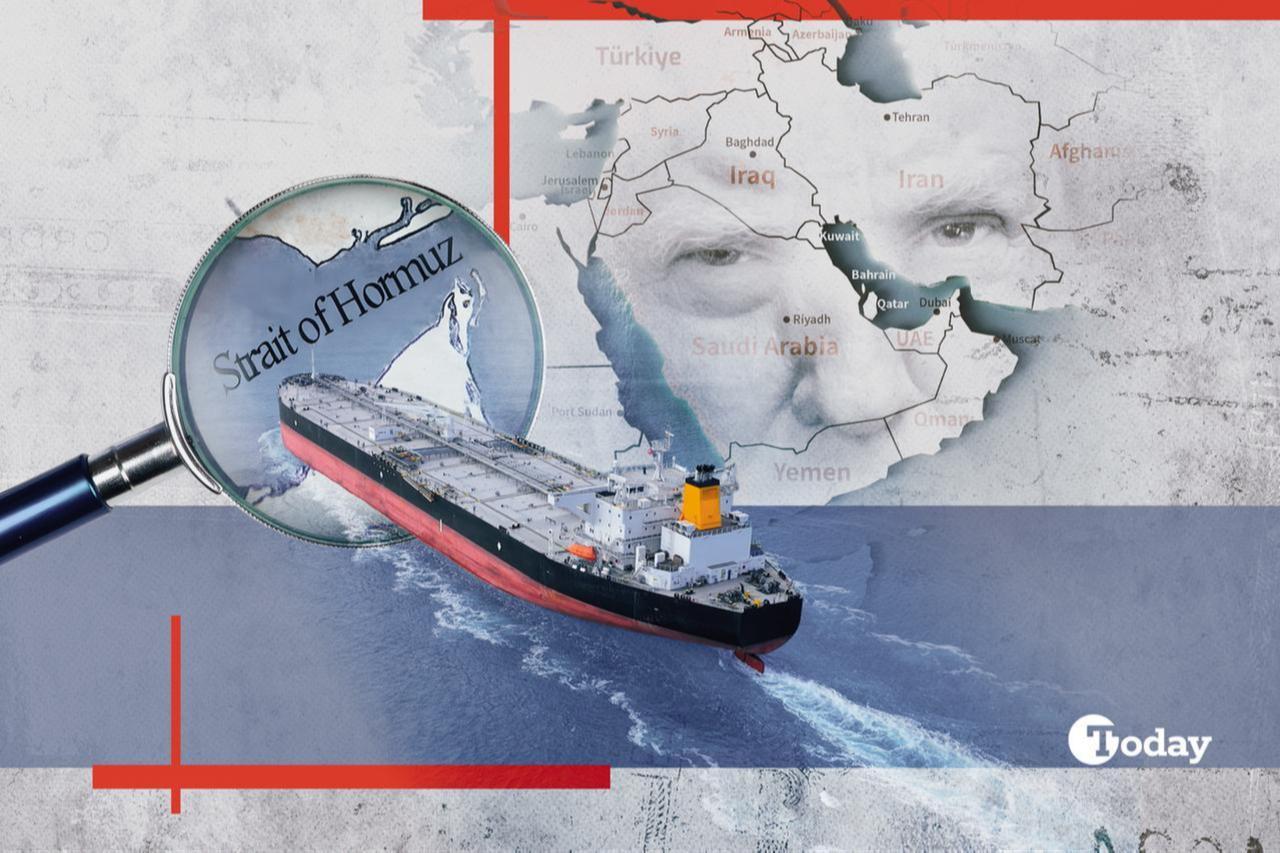
An illustration showing the Strait of Hormuz and a map of the Middle East. (Collage prepared by Türkiye Today/Zehra Kurtulus)
April 11, 2026 02:19 PM GMT+03:00
For decades, the specter of a nuclear-armed Iran has dominated the nightmares of Western strategists.
From the halls of Congress to the corridors of the Knesset, the debate has remained fixed on centrifuges, enrichment levels, and the “breakout time” required for Tehran to assemble a warhead.
However, the 40-day conflict involving the United States, Israel, and Iran has shattered this conventional paradigm.
An unexpected reality has emerged from the smoke of battle: Iran does not need a nuclear bomb to achieve strategic deterrence against its archenemies.
Iran has realized that it possesses a weapon of mass disruption far more potent than any atomic bombs.
As Dmitry Medvedev, the former Russian President, noted, Iran has already tested its “nuclear” weapon: control over the Strait of Hormuz.
The Strait of Hormuz is the world’s most critical oil artery—a narrow chokepoint through which one-fifth of the world’s liquid energy consumption passes daily.
Since the start of the conflict on Feb. 28, Iran’s disruption of shipping in the Strait has severely impacted global energy markets and maritime trade, and in the wake of recent hostilities, the Islamic Revolutionary Guard Corps (IRGC) shifted its focus from land-based defense to maritime dominance.
By weaponizing the logistics of the Persian Gulf, Iran has proven that its true power lies in its ability to wage economic, logistical, and energy warfare.
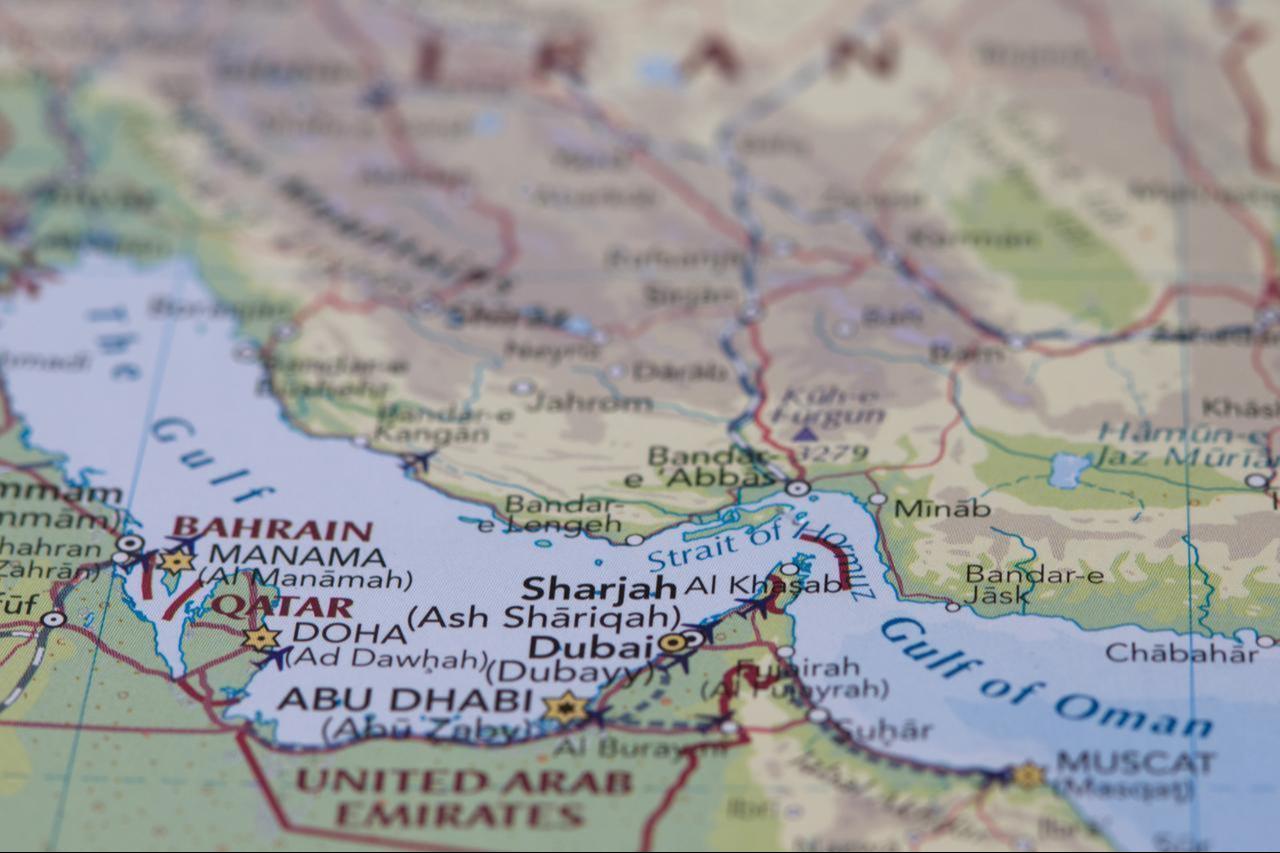
A close-up map highlights the Strait of Hormuz, bordered by Iran and key Gulf states, accessed on April 14, 2024. (Adobe Stock Photo)
Reverse engineering regime change
The strategic calculus has undergone a seismic shift.
For years, the stated or whispered goal of Washington was regime change in Tehran.
Yet, as the IRGC tightened its grip on the strait, the roles reversed. By disrupting shipping and threatening the global energy supply, Iran demonstrated a new capability: the power to influence political stability within the United States and the rest of the world.
In a globalized economy, energy prices are not just economic issues; they are the pulse of political stability.
A sustained spike in global inflation, triggered by a blockade or a “shipping war” in the Strait, could challenge Western governments—and, for that matter, all governments—more effectively than any conventional war.
Thus, as Vice President J.D. Vance is about to meet with Iranian negotiators in Pakistan to hammer out a potentially lasting peace deal, the U.S. priority has abruptly pivoted from the lofty goal of regime change to the desperate necessity of reopening the Strait.
This realization redefines the concept of deterrence. In the traditional sense, nuclear weapons prevent war by threatening total destruction.
But nuclear weapons are often “too big, too consequential” to use; they invite immediate global pariah status. Conversely, the Strait of Hormuz offers a “sliding scale” of deterrence.
Having survived an unprovoked, indiscriminate, illegal, and existential U.S.-Israeli airstrikes and Trump’s genocidal threats to wipe out Iran’s civilization,
Tehran is now undeterred and can dial the pressure up or down—hitting a tanker here, harassing a destroyer there, or mining a shipping lane—creating a perpetual energy crisis that keeps the global economy in a state of high anxiety.
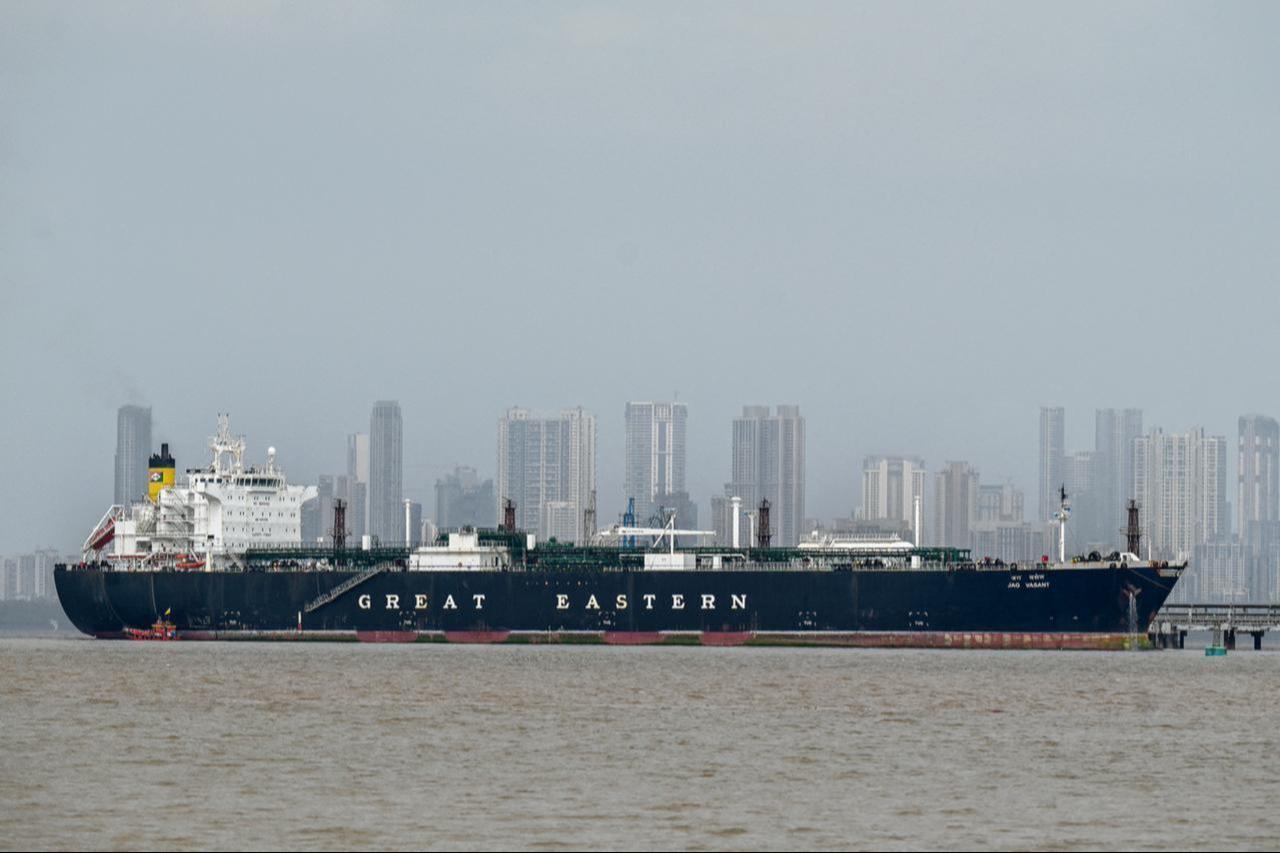
Jag Vasant, an Indian-flagged tanker carrying liquefied petroleum gas (LPG) that transited through the Strait of Hormuz amid the Middle East war, remains docked at an offloading terminal along the coast in Mumbai on April 1, 2026. (AFP Photo)
New diplomatic hand
As diplomacy between Tehran and Washington tentatively resumes, the stakes have fundamentally changed.
In previous rounds of negotiations, the focus was almost entirely on nuclear enrichment and ballistic missile ranges. Today, Iran enters the room with a much stronger hand.
Tehran may be willing to offer concessions on its nuclear program or limit the range of its missiles, but it is unlikely to concede regarding its influence over the Strait.
Tehran understands that a nuclear deal is a piece of paper that can be trashed by a U.S. president at any time, but geographic control of the world’s energy chokepoint is a physical reality.
Iran may use this leverage to pressure the U.S. and its ally Israel, to halt massacres in Lebanon, Palestine, or other international theaters.
Iran can’t find or remove its own mines in Strait of Hormuz
Region 1 min read
‘You don’t need a backup plan’, Trump vows Hormuz will open ‘with or without’ Iran
Region2 min read
Iran ‘has no cards’ other than Hormuz as Trump says US warships reload
Region1 min read
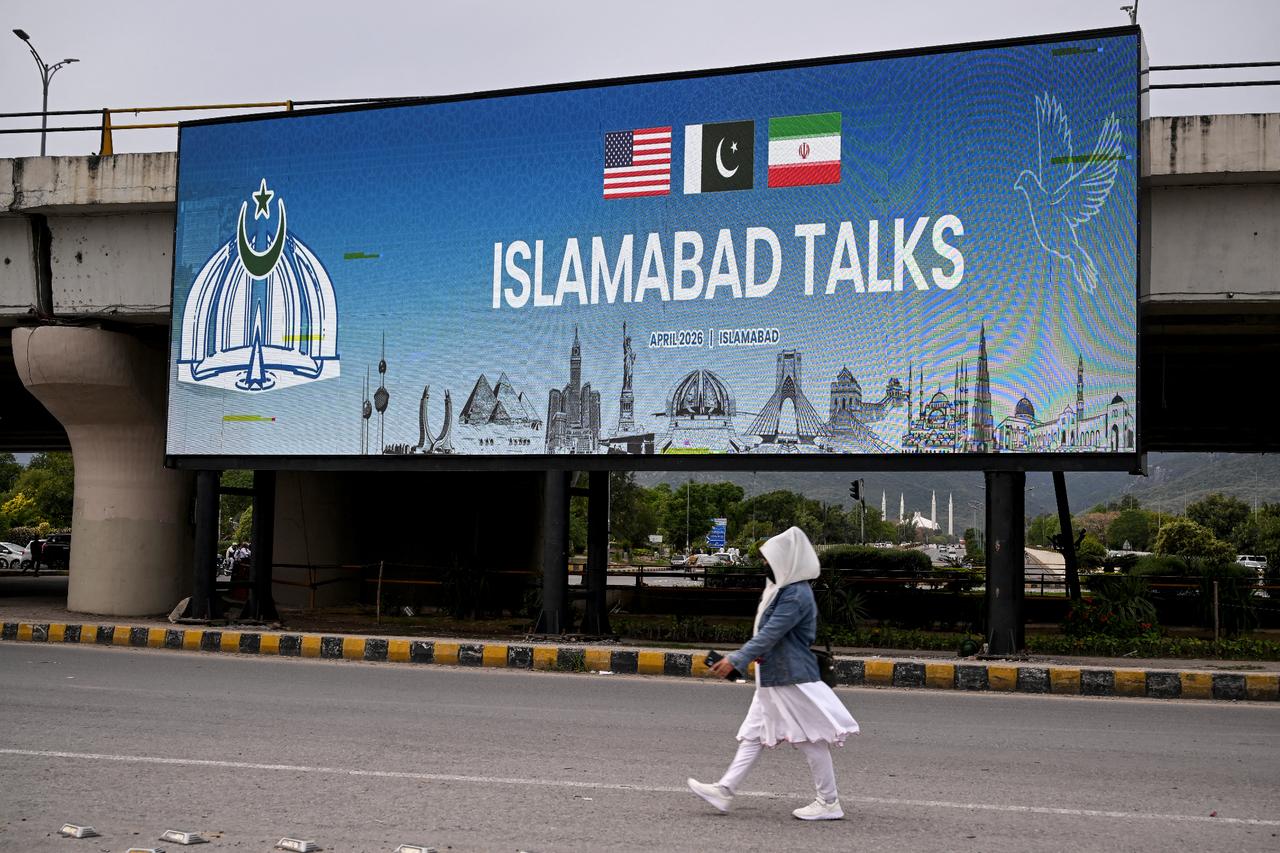
Iran is expected to use its “discovered” maritime leverage—beyond immediate financial gain—to demand long-term security guarantees and deterrence measures in any final peace settlement with the United States.
However, Iran’s reliance on this “maritime deterrent” is not without risks. The image of confidence Iran projects masks a deeply fragile domestic reality; it is a regime grappling with economic collapse, political unrest, and weakening legitimacy in the aftermath of the mass killings of protesters on Jan. 8 and 9 in the streets of Tehran.
The very “energy war” Iran wages to protect itself also risks further isolating its economy and impoverishing its people, potentially fueling the domestic fire it seeks to extinguish.
The United States now faces a grueling path forward. After the devastating 40-day war, mistrust is at an all-time high, and the critical talks on the Strait, the proxies, and the nuclear program are now inextricably linked.
While the United States has long positioned itself as the primary guarantor of “free passage” in international waters, particularly since World War II, that promise is difficult to keep when the “gatekeeper” is a hostile power willing to commit to a war of economic attrition.
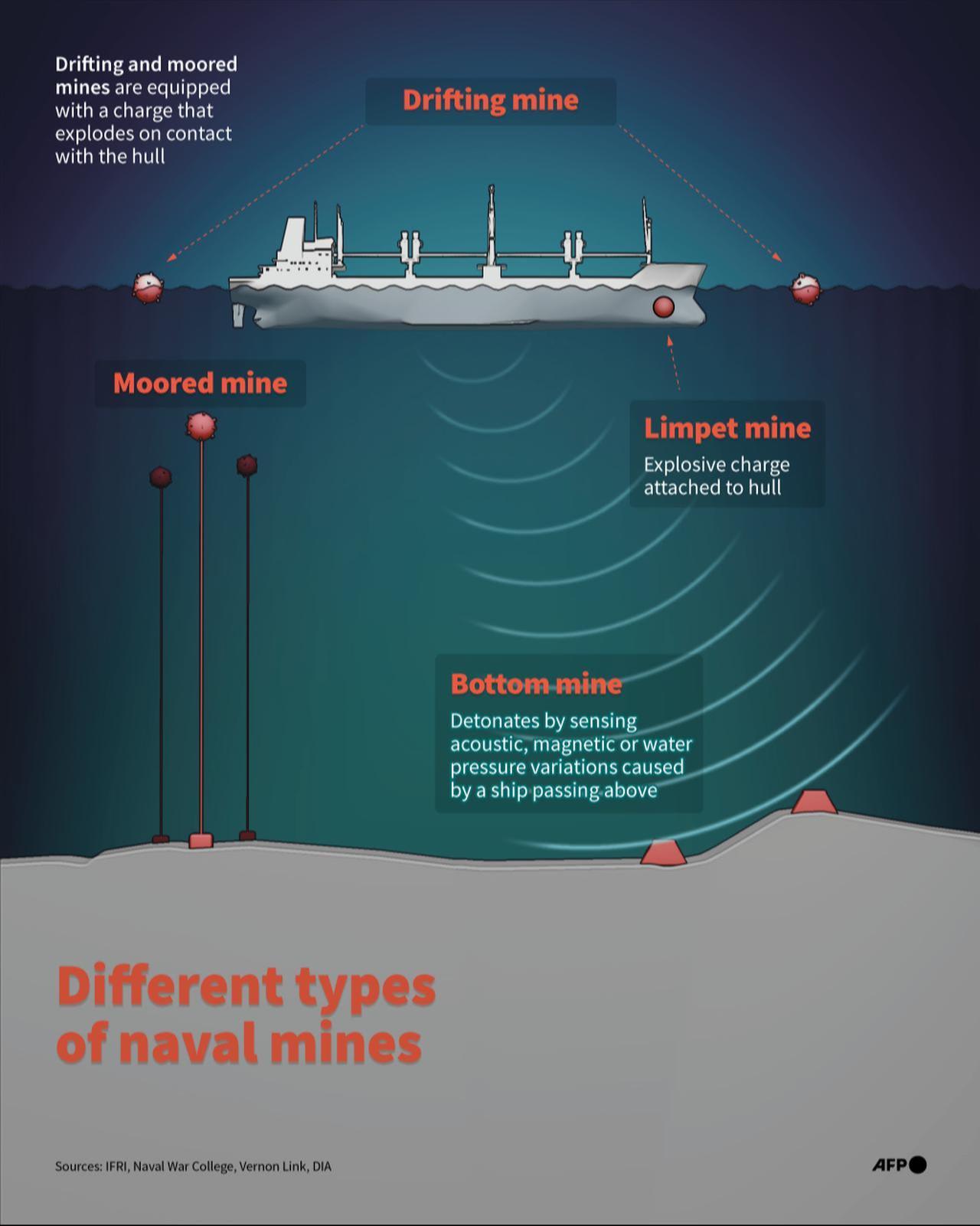
Infographic showing the different types of naval mines that the United States has accused Iran of using in the Strait of Hormuz, a claim denied by Tehran. (AFP Infographic)
The asymmetric era
The lessons of the last 40-days are clear: we must stop viewing the Iranian threat through the narrow lens of the 20th-century proliferation and nuclear arms race.
We are in a new era of “asymmetric deterrence,” where the flow of a commodity is more valuable than the splitting of an atom.
Iran has discovered that it doesn’t need a bomb to challenge its enemies if it can simply harass them at the gas pump.
The stakes are high, and the declared two-week ceasefire is fragile, as Iran’s 10-point and Trump’s 15-point plans have few overlaps, if any.
Regardless of how the talks in Islamabad progress, the Strait of Hormuz will remain the true barometer of peace and a new tool of Iran’s power projection and deterrence.
Until the world finds a way to decouple the global economy from this 21-mile-wide chokepoint, Iran will remain the most powerful “un-nuclear” state in the region and beyond, holding the keys to global stability in the palm of its hand.


No comments:
Post a Comment