Washington Must Calibrate Expectations and Negotiate with Iran

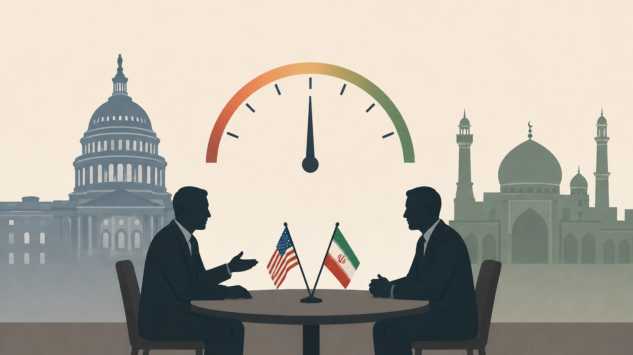
Washington Must Calibrate Expectations and Negotiate with Iran
By Ahmad Hashemi
May 28,2026
President Donald Trump recently said that he was ready to resume strikes on Iran but held off on the plan at the request of Gulf Arab leaders. If anything, this is indicative of the fact that we have once again arrived at a perilous moment in American foreign policy—one that could drag us into another “forever war” in the Middle East.
Yet, Trump’s military and national security advisors need to ask themselves if, militarily, the U.S. can achieve more than what has already been accomplished; considering that after a long 40-day campaign against Iran marked by real operational achievements but profound strategic failure, the limits of military power have been laid bare.
The Illusion of Capitulation
President Trump made some statements against the entirety of the Iranian population. In essence he threatened to wipe out the whole Iranian civilization if the regime will not surrender unconditionally. This does not consider that Iran, leaving the current rulers aside for a moment, is still home to a proud, ancient civilization. Patriotic fervor and the Shiite faith command Iranians to die for the noble cause of defending their homeland and never surrendering to an arrogant bully, especially in the face of disrespectful, apocalyptic, rhetoric coming from President Trump.
The United States possesses the most powerful military and can win almost any war. However, as French statesman Georges Clemenceau once said, “It is far easier to make war than peace.” And in the U.S. case, winning battles can be easy, but a failure of a clear strategic vision may allow a superpower to win many battles without achieving a peace that will secure meaningful strategic objectives.
President Trump can declare victory and end this war with Iran. With significant military achievements at hand, it is high time for Washington to give diplomacy a chance and see the bigger picture through the lens of strategic insight. The central problem confronting the Trump administration is not a lack of kinetic options, but a mismatch between war tactics and the achievement of strategic goals. If Washington genuinely seeks long-term stability in the region, it must set aside (for now at least) the unlikely outcome of Iranian capitulation and reassess what the diplomatic negotiations currently underway can realistically achieve.
The administration’s current deadlock stems from a mutual, unyielding belief in victory. President Trump appears convinced that sustained pressure (the blockade) will force Tehran to yield, while Iran believes it retains vital strategic leverage—control over the Strait of Hormuz, where Tehran believes it can hold one-fifth of the world’s energy hostage in order to extract concessions. In this deadlock some still harbor the belief that America can launch a new, massive and decisive military attack that will force Iran to the negotiating table on American terms. Such a scenario, while theoretically possible, fundamentally misunderstands the nature of the regime and the resilience of the Iranian people.
A more viable diplomatic approach
The reality is that the only viable way to reopen the Strait of Hormuz, a vital global energy artery, is through an agreement that acknowledges Iran’s security interests in the region and ends the naval blockade. Military options exist, but as recent unsuccessful experiences—including “Project Freedom”—demonstrate, attempting to force the strait open militarily triggers an immediate Iranian response. Even an expanded military campaign or a high-risk ground operation cannot overcome Iran’s vast geography and complicated terrain. Such an operation will not stop Iran from launching missiles or drones at commercial tankers.
To date, the operational achievements of the U.S. military campaign have failed to produce a cumulative strategic victory. The Islamic Republic has not collapsed. According to U.S. intelligence estimates, its conventional capabilities, while diminished by the bombing campaign, remain significant, and its enriched nuclear materials are still intact. When examining Iran’s conduct, it is clear that the regime has not only stayed within its pre-war red lines but has actively hardened them.
The 40-day war has shocked the psyche of the Iranian people. It has had a rally-around-the-flag effect, bringing pro-regime and anti-regime crowds, as well as oppressed ethnic minorities, closer to a previously highly unpopular regime.
Emboldened by not being defeated by two nuclear-armed military powers, Tehran remains entirely unwilling to discuss the nuclear issue unless it receives economic relief, guarantees for ending the conflict, and recognition of maritime freedom for Iranian ships. Therefore, under its current collective leadership, dominated by the Islamic Revolutionary Guard Corps (IRGC), capitulation is simply not an option.
The Limits of Kinetic Action
This U.S. strategic misconception is most evident regarding the Iranian nuclear issue. The war was initially justified on the premise that Iran was on the verge of acquiring a nuclear bomb and that only military force could stop it. Yet neither assumption withstands serious scrutiny.
U.S. intelligence estimates assess that Iran has not made the final political decision to weaponize its nuclear program. More importantly, there are limits as to what kinetic action targeting nuclear sites can achieve. Indeed, despite massive airstrikes on enrichment facilities at Natanz, Fordow, and Isfahan, discussions in Washington and Jerusalem still revolve around Iran’s remaining nuclear potential. Airstrikes can damage facilities and delay timelines, but they cannot destroy accumulated scientific knowledge, industrial expertise, and all technological infrastructure. Crucially, continuing down this path may accelerate the exact outcome Washington seeks to prevent.
Iran’s former supreme leader, Ali Khamenei, had issued a religious decree, or fatwa, which forbade the production, stockpiling, and use of nuclear weapons. But with the political landscape shifting in Tehran, the new hardline leadership may draw a painfully simple lesson from American pressure: states without a nuclear deterrent remain perpetually vulnerable to external attack. By continuing a kinetic campaign to prevent an Iranian bomb, the United States risks pushing Iran directly into weaponizing its capabilities as an ultimate guarantee of regime survival.
Seeking China’s Help is Playing into Beijing’s Hands
Meanwhile, President Trump directly sought Beijing’s help to pressure Iran into reopening the Strait of Hormuz during his recent trip to China. Yet, relying on the United States’ top adversary to break the Iranian stalemate is not going to be productive. The administration of President Trump does not need a Henry Kissinger as its National Security Advisor to realize that Beijing has a vested interest in seeing the U.S. dragged into conflicts in the Middle East and distracted away from the Taiwan issue.
China has no interest in a nuclear-armed Iran, but it is equally unprepared to help Washington achieve a decisive victory over Iran. Beijing views the Islamic Republic as a critical counterweight in its broader strategic competition with the United States. It will continue to purchase discounted Iranian oil and provide dual-use materials to support Iran’s missile infrastructure.
A Pivot Toward Strategic Reality
President Trump faces a fundamental strategic choice. He cannot simultaneously frame Iran as a regime to be obliterated while expecting meaningful peace negotiations to succeed. More wars will not produce a shift in Iranian behavior because there is a vast, at the moment unbridgeable gap between inflicting operational damage to Iran and forcing a strategic surrender.
A diplomatic solution is still possible, but it requires Washington to engage directly with the substance of Iran’s core demands: ending the economic siege, restoring maritime access, and reducing regional pressures before addressing long-term nuclear constraints. This does not mean trusting Tehran; it means recognizing strategic reality.
All in all, an imperfect negotiated framework with intrusive inspections—perhaps similar to the denounced JCPOA—remains the only viable path to constrain Iran’s nuclear capabilities. If the administration refuses to adjust its assumptions as to what is feasible, the options narrow to a prolonged, destabilizing stalemate or a renewed military confrontation that deepens the escalation without ever resolving the core conflict.
Legal Disclaimer:
The Global Policy Institute (GPI) publishes this content on an “as-is” basis, without any express or implied warranties of any kind. GPI explicitly disclaims any responsibility or liability for the accuracy, completeness, legality, or reliability of the information, images, videos, or sources referenced in this article. The views expressed are those of the author and do not necessarily reflect the opinions or positions of GPI. Any concerns, copyright issues, or complaints regarding this content should be directed to the author.
 | Ahmad Hashemi is Director of the Middle East and Central Asia Program at the Global Policy Institute, a naturalized U.S. citizen and former Iranian Foreign Ministry official, journalist, and pro-democracy activist. He holds advanced degrees in political science, defense, and strategic studies, is pursuing an MA in Strategic Intelligence Studies, and has published widely in major international outlets in multiple languages. |
https://globalpi.org/research/washington-must-calibrate-expectations-and-negotiate-with-iran
Here is a summary of the article:
The Limits of Military Power: Following a 40-day U.S. military campaign against Iran, the author argues that while the U.S. achieved operational success, it resulted in a strategic failure. Further kinetic actions are unlikely to achieve anything more.
The Illusion of Capitulation: President Trump’s threats of total destruction disregard Iran’s ancient civilization and patriotic fervor, which drive the populace to resist rather than surrender. The current deadlock stems from Trump’s belief that a blockade will force a surrender, countered by Iran’s leverage over the Strait of Hormuz.
The Failure to Force Collapse: The military campaign has not collapsed the Iranian regime, destroyed its conventional capabilities, or compromised its enriched nuclear materials. Instead, the war triggered a “rally-around-the-flag” effect, uniting previously fractured pro- and anti-regime factions against external aggression.
The Nuclear Dilemma: While the war was justified to stop Iran from building a bomb, airstrikes cannot erase scientific and technical knowledge. Continued military pressure risks incentivizing Iran’s new, hardline IRGC-dominated collective leadership to weaponize its program as an ultimate guarantee for survival.
Misplaced Reliance on China: Seeking Beijing’s help to pressure Iran is counterproductive. China has a vested interest in seeing the U.S. remains distracted in the Middle East—away from Taiwan—and views Iran as a critical strategic counterweight to American power.
A Shift to Diplomacy: The author concludes that the only viable way to reopen the Strait of Hormuz and constrain Iran’s nuclear program is through direct diplomacy. Washington must calibrate its expectations, abandon demands for unconditional capitulation, and negotiate a framework—similar to the JCPOA—that addresses Iran’s security interests and ends the economic siege.
#JCPOA (or #IranNuclearDeal)
# MaritimeSecurity


No comments:
Post a Comment