For Peace to Prevail, Mutual Recognition Is Needed in Tel Aviv and Tehran

For Peace to Prevail, Mutual Recognition Is Needed in Tel Aviv and Tehran
Jul 07, 2026
For Peace to Prevail, Mutual Recognition Is Needed in Tel Aviv and Tehran
Ahmad Hashemi
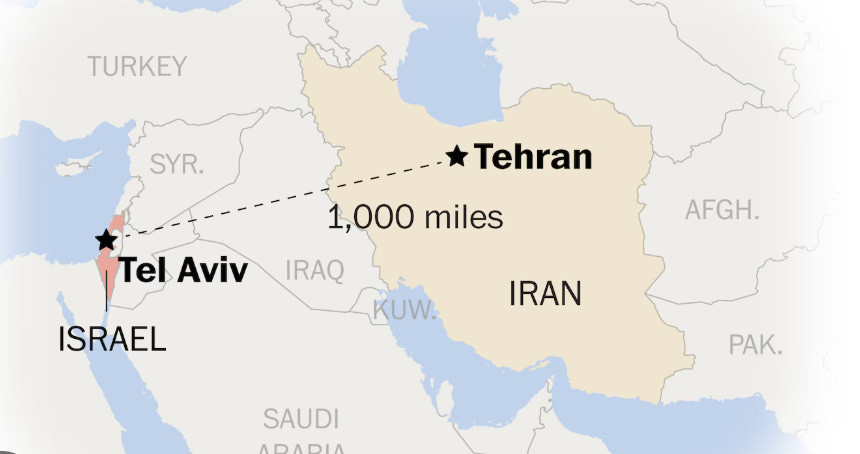
In an effort to forge peace between Israel and Lebanon, the Trump administration has aggressively accelerated its diplomatic maneuvering. These efforts recently culminated in Washington, D.C., where the two nations signed a historic 14-point framework agreement. Yet, despite the fanfare, these piecemeal diplomatic triumphs are fundamentally doomed to fail because the primary barrier to a durable Middle Eastern peace remains unaddressed: Israel’s entrenched occupation and expansionist policies.
Today, the Israeli military continues to kill children in Gaza, assassinate Lebanese people, destroy heritage sites across south Lebanon, and target ordinary Syrians while the regime of Ahmad Sharaa remains accommodating, innocuous, and weak.
Israel justifies the occupation of the entirety of Palestine, parts of Syria, and portions of southern Lebanon through a combination of biblical claims, citing historical “Promised Land” borders in the Torah, and geopolitical security doctrines. Alarmingly, Israel’s thirst for land grabs appears boundless; senior Israeli officials openly discuss the creation of a “Greater Israel” by reconquering biblical lands spanning from the Nile to the Euphrates, while others actively contemplate a war with NATO’s second-largest standing military force, Türkiye, to solidify regional hegemony.
Compounding this instability are the reckless, joint U.S.-Israeli military strikes against Iran carried out in June 2025 and on February 28, 2026. Far from forcing a total surrender or triggering a collapse of the Iranian regime, these interventions achieved the exact opposite: they emboldened Washington’s adversaries and intensified Tehran’s domestic repression, as well as its nuclear and regional ambitions.
These strategic errors make prioritizing comprehensive diplomacy more urgent than ever. President Trump, who frequently touts himself as “the Peace President” worthy of the Nobel Peace Prize, must realize that he cannot earn that title by becoming “the Forever-War President” and repeating the mistakes of his predecessors.
In addition, peace cannot be established in a compartmentalized fashion. For decades, the international community has treated the Middle East as a zero-sum theater where one nation’s security inherently requires another’s destruction. Washington has historically approached these overlapping conflicts through isolated, piecemeal diplomacy—brokering a normalization agreement here, managing a containment strategy there. The periodic explosions of violence are a stark reminder that this fragmented approach does not work, and any comprehensive strategy must recognize that the root cause of regional tensions lies in the Palestinian issue.
If we are to break this cycle of generational violence and trauma, we must simultaneously confront the region’s two most defining standoffs, centered on Iran and Israel. True, lasting peace requires a grand, reciprocal shift in legitimacy: Israel must recognize the State of Palestine, and consequently, Iran must recognize the State of Israel.
To suggest this dual proposition in today’s highly polarized climate sounds like dangerous idealism. However, continuing the current trajectory is a recipe for perpetual warfare. Israel can no longer operate under the illusion that the Palestinian issue can be indefinitely managed behind security walls. Security cannot be built on the permanent disenfranchisement of millions of people living under occupation.
This is not a game of chicken; as the occupying power, Israel bears the responsibility to take the first step and make a concession, not Iran. For Israel to secure its future as a democratic homeland for Christians, Muslims and Jews, it must end the occupation and unconditionally recognize the State of Palestine without further ado. Rather than being a concession, this is an act of self-preservation and a correction of the historic injustice of the Nakba. A viable, sovereign Palestinian state would instantly undermine the narrative of armed resistance, stripping extremist groups of their primary recruitment tools and unlocking full integration for Israel within the Muslim world. To achieve this, Israel—as a settler-colonial project founded on Zionist supremacist ideology—must undergo a transformational change, dismantle its apartheid system, and treat Palestinians as equal human beings worthy of their own state. Ultimately, the only door to lasting peace is the two-state solution.
The ideological implications would be monumental. By establishing an independent Palestine, the regime in Iran would be disarmed of its primary geopolitical narrative. Suddenly, Tehran would find itself in an identity crisis and soul-searching. This, in turn, would pave the way for the Iranian regime, alongside the broader Arab and Muslim worlds, to formally recognize Israel.
The radical regime in Iran, too, needs to do its part by undergoing transformational change. The Palestinian cause remains the most enduring and unifying popular movement across the Muslim world. For over forty years, the Islamic Republic has anchored its identity on leading this cause, funding an “Axis of Resistance” at an immense economic cost to its own citizens, and explicitly denying Israel’s right to exist.
Henry Kissinger famously argued that Iran’s leadership must decide whether it wants to function as a traditional, sovereign “nation” focused on mutual international cooperation and its own national interests, or as a revolutionary “cause” dedicated to ideological crusades and regional destabilization.
The continued occupation of Palestine has long radicalized the Islamic world, and this radicalizing force has deeply influenced the strategic culture in Iran. Yet, the establishment of a sovereign Palestinian state would reverse this inclination and facilitate Iran’s transition from a revolutionary “cause” to a “normal” state.
While this transition remains a bumpy road, expediting Iran’s evolution from an ideological cause into a status quo, Westphalian state is key. Ultimately, if Iran formally recognizes Israel within secure, internationally agreed-upon borders, it would dismantle the foundational justification for regional proxy wars.
Achieving mutual recognition is a massive, complex challenge. Skeptics will rightly argue that neither political establishment in Tel Aviv nor Tehran possesses the will for such a paradigm shift.
However, strategic realities are forcing hands. President Trump may have been hyperbolic in his achievements regarding Iran, but he is absolutely right that, in some ways, regime change has already happened there. Recent U.S.-Israeli airstrikes have triggered leadership changes in Iran’s political, military, and clerical ranks, potentially opening the door for new, modernizing MBS-like leaders. Meanwhile, Israel’s upcoming October elections could finally end the hardline tenure of Prime Minister Benjamin Netanyahu.
President Trump currently possesses the unique coercive leverage to pressure both sides. He is the most pro-Jewish, pro-Israel president in U.S. history and has the legitimacy to pressure Israel to halt its forever wars and put a leash on Israel’s insatiable settler-colonial and expansionist tendencies. Trump has already taken steps in the right direction by establishing the Board of Peace for Gaza, effectively halting the genocide, and demanding a cessation of military operations in Lebanon.
Washington must expand peace efforts across the board. This objective aligns with Iran’s push for a “multifront peace,” which centers on a comprehensive diplomatic strategy to permanently end regional conflict, including hostilities involving proxies like Hezbollah in Lebanon. Remarkably, both the United States and Iran now appear to be on the same page regarding the necessity of a comprehensive, multi-front ceasefire. This synergy provides a rare opportunity for the White House to capitalize on this alignment and permanently abandon its fragmented strategy and adopt a comprehensive approach.
The Trump administration must trade the illusion of total victory over Iran for the hard, necessary compromises of coexistence between Israel, Palestine, Iran, and the Arab states in the region—a long-overdue process that starts with Palestinian statehood. Palestinian freedom translates directly into Israeli security. It is time for Israel to see Palestine, and it is time for Iran to see Israel.
- #AhmadHashemi
- #MutualRecognition
- #TelAvivAndTehran
- #AhmadHashemi
- #MiddleEastPeace
- #GrandBargain
- #TwoStateSolution
- #FreePalestine
- #EndTheOccupation
- #PalestinianStatehood
- #IsraeliSecurity
- #EastJerusalem
- #IranIsrael
- #AxisOfResistance
- #WestphalianState
- #Tehran
- #MiddleEastDiplomacy
- #ComprehensivePeace
- #TrumpForeignPolicy
- #PeacePresident
- #ComprehensiveDiplomacy
- #NoMoreForeverWars
- #BoardOfPeace
- #ForeignPolicy
- #InternationalRelations
- #MiddleEastPolitics
- #Geopolitics
- #PeaceProcess


No comments:
Post a Comment