From Hormuz to Bab al-Mandab: Tehran’s Levers to Gain the Upper Hand in Negotiations

From Hormuz to Bab al-Mandab: Tehran’s Levers to Gain the Upper Hand in Negotiations
Jul 17, 2026
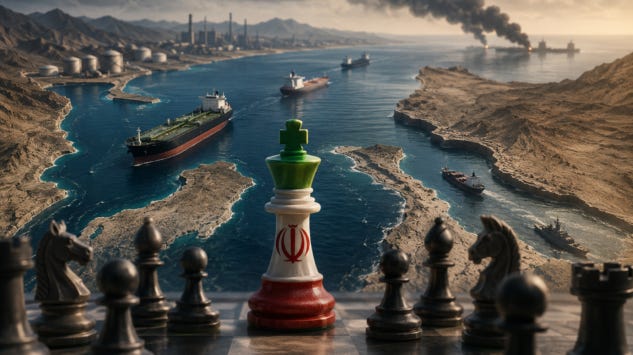
From Hormuz to Bab al-Mandab: Tehran’s Levers to Gain the Upper Hand in Negotiations
By Ahmad Hashemi
July 16,2026
The 40-day joint U.S. and Israeli military operation against Iran, which began on February 28, 2026, made Iran realize that it has a leverage point as important as, if not more important than, a nuclear bomb: its grip on the Strait of Hormuz. By using this control to exert pressure on global energy flows and other trade, Iran was able to extract concessions from the United States and stop the air war. Now, Iran would like to replicate that success and achieve greater deterrence by expanding its influence over the Bab al-Mandab Strait via its Yemeni proxy force, the Houthis.
Expanding influence to the Red Sea
Iran is testing the waters on how it can gain a further foothold there. On July 3, 2026, an Iranian civilian aircraft operated by Mahan Air successfully landed at Sana’a International Airport in Yemen, resuming direct air links after a decade-long interruption, this way challenging the Saudi-led blockade. Apparently, the flight transported a Houthi delegation to the funeral of Iran’s late Supreme Leader, Ali Khamenei, along with over 200 Yemeni citizens. The Houthi government claimed that Saudi warplanes attempted to intercept the aircraft, only to be forced back by Houthi air defense missiles.
While the “Axis of Resistance” quickly trumpeted the landing as a triumphant fracturing of Yemen’s 11-year air blockade, the episode signals a much deeper shift in Middle Eastern geopolitics. Beyond the immediate propaganda impact, this single flight exposes the undercurrents of a new Iranian grand strategy aimed at controlling regional waterways. It suggests an attempt to supply advanced weaponry more proactively to Yemen, further empowering the Houthis. This could, in turn, lead to a dual-chokepoint squeeze –the Red Sea and the Strait of Hormuz– designed to hold global energy trade and other maritime traffic hostage, this way maximizing Tehran’s leverage on the international stage.
Controlling the choking points
Since the 40-day war, Iran’s primary maritime card has been the Strait of Hormuz, a geographic reality it directly borders and can physically disrupt, at will. However, recent regional conflicts have cemented a critical evolution in Iran’s military doctrine. Iran has realized the immense strategic value of pairing its dominance over Hormuz with synchronized disruption at the Bab al-Mandab Strait—the vital gateway to the Red Sea that handles roughly 12 percent of globally traded oil and roughly 30 percent of global container traffic.
Because Iran does not physically border the Bab al-Mandab, it projects power through its proxy, the Houthis. By supplying the group with advanced drones, missiles, and explosive boats, Tehran can effectively close the corridor by driving insurance premiums and transit risks to commercially unviable levels.
Control leads to leverage
The strategic math behind this dual-front maritime threat is clear. By holding the keys to both chokepoints simultaneously, Iran gains an unprecedented bargaining chip in its ongoing talks with the U.S. This isn’t a theoretical exercise; it is directly tied to the diplomatic chessboard. Consider this: Following escalating regional operations in Lebanon and Gaza, state-affiliated media reported that negotiators suspended indirect talks between Tehran and the United States. Almost immediately, Tehran warned that its Axis of Resistance was prepared to lock down both maritime arteries unless its demands were met. Iran’s calculation is that if and when diplomatic channels freeze, and the risk of military confrontation increases, Tehran can raise maritime tensions to exact costs and maintain deterrence.
Security problems for Saudi Arabia
This evolving reality presents an excruciating balancing act for Saudi Arabia. Riyadh currently finds itself caught between two conflicting objectives: preserving its fragile, hard-won détente with Iran—partially facilitated by the “Islamabad Quartet” alongside Pakistan, Turkey, and Egypt—and preventing the Houthis from establishing a permanent, sophisticated military launchpad on its southern border.
If the air blockade on Yemen continues to erode, as the July 3 flight suggests it might, the critical question is what comes next. Future flights into Sana’a will likely not just carry diplomatic delegations and civilians; they will serve as conduits to rebuild and upgrade the Houthis’ long-term military capabilities. The Houthis’ aggressive public rhetoric makes it clear they will no longer tolerate Saudi restrictions on their airspace, threatening to strike Saudi airports and vital infrastructure if challenged. Riyadh’s ability to manage this tension without collapsing the broader regional de-escalation framework will dictate the future of Middle Eastern security.
Tehran’s two-front chokehold strategy appears to be slowly taking shape to the detriment of regional stability and international maritime security. If the Iranian regime succeeds in its efforts to dominate the Bab al-Mandab, the international community can no longer afford to view the conflict in Yemen or the safety of the Red Sea as isolated theater dynamics. Tehran views them as integrated levers of its global economic leverage.
Tehran does not need a navy or an air force
Iran may have lost its entire outdated air force and navy in the recent conflict with the U.S. and Israel, but it has found a more powerful weapon. By synchronizing pressure across both the Strait of Hormuz and the Bab al-Mandab, Iran has discovered that it does not need a world-class navy or air force to influence global energy markets or defy Washington. It only needs to keep the shipping lanes dangerously unpredictable. As both nations move from conflict to settlement, this dual-chokepoint waterway threat may prove to be the most enduring and dangerous strategic consequence of all.
Ultimately, U.S. negotiators cannot overlook the significance of freedom of navigation through both strategic waterways. The Iranian regime cannot be allowed to cripple the world economy. Washington must include the issue of uninterrupted maritime access and free commercial shipping in any future comprehensive agreements settled with the Islamic Republic.
Link:
Legal Disclaimer
The Global Policy Institute (GPI) publishes this content on an “as-is” basis, without any express or implied warranties of any kind. GPI explicitly disclaims any responsibility or liability for the accuracy, completeness, legality, or reliability of the information, images, videos, or sources referenced in this article. The views expressed are those of the author and do not necessarily reflect the opinions or positions of GPI. Any concerns, copyright issues, or complaints regarding this content should be directed to the author.

Ahmad Hashemi is Director of the Middle East and Central Asia Program at the Global Policy Institute, a naturalized U.S. citizen and former Iranian Foreign Ministry official, journalist, and pro-democracy activist.
He holds advanced degrees in political science, defense, and strategic studies, is pursuing an MA in Strategic Intelligence Studies, and has published widely in major international outlets in multiple languages.
- #AhmadHashemi
- #GlobalPolicyInstitute
- #Geopolitics
- #MiddleEastSecurity
- #GrandStrategy
- #ForeignPolicy
- #InternationalSecurity
- #DiplomaticNegotiations
- #StraitOfHormuz
- #BabAlMandab
- #RedSea
- #MaritimeSecurity
- #FreedomOfNavigation
- #GlobalTrade
- #EnergyMarkets
- #Iran
- #Tehran Strategy
- #Houthis
- #YemenConflict
- #AxisOfResistance
- #SaudiArabia
- #USForeignPolicy


No comments:
Post a Comment